What is bird flu?
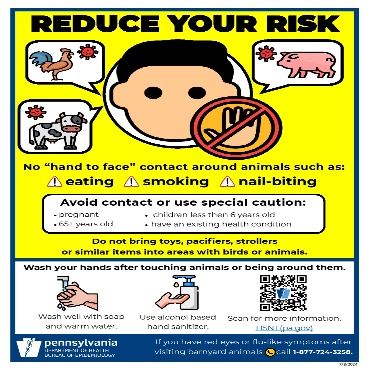
Avian influenza, or bird flu, is a broad term that refers to several types of influenza that normally infect birds. It is widespread in birds worldwide and has caused outbreaks in poultry and U.S. dairy cows. Bird flu can make wild birds, chickens, turkeys, and other animals like goats, cows, foxes, and cats sick. Humans can catch bird flu from sick animals, things touched by sick animals, or raw milk from sick cows.
While the current public health risk is low, the H5N1 virus has raised concern among health officials because it has sickened dozens of people in the U.S., including one human death. To date, human-to-human transmission of avian influenza has not been identified in the United States.
The CDC is using its flu surveillance systems and working with states to monitor people with animal exposures and H5N1 flu activity in humans.
If you find a sick or dead bird...
Report sick or dead poultry (turkey, grouse, or chickens) to the Pennsylvania Bureau of Animal Health and Diagnostic Services.
📞 717-772-2852, option 1
Reporting sick or dead wild birds (hawks, eagles, crows, gulls, ravens, ducks, and geese) to the Pennsylvania Game Commission.
📞 833-PGC-Hunt
📧 pgc-wildlifehealth@pa.gov
💻 Wildlife Health Survey (online tool)